
Executions, Expropriations, Crackdowns
Egypt Security Sector Report

This week’s issue traces how repression is administered, normalized, and expanded, from the courtroom to the countryside and the digital sphere. I look at the death of Mohamed Nagi Shehata as a symbol of Egypt’s post-2013 justice system, the military’s growing grip over land and resources, and the coordinated campaigns driving new security crackdowns. Different arenas, same machinery of control.
From Bench to Gallows: The Legacy of Mohamed Nagi Shehata
Mohamed Nagi Shehata, former head of Egypt’s Terrorism Circuit and Cairo Criminal Court, died on 6 February, ending the career of the judge who more than any other embodied the post-2013 judiciary’s conversion into an instrument of repression.
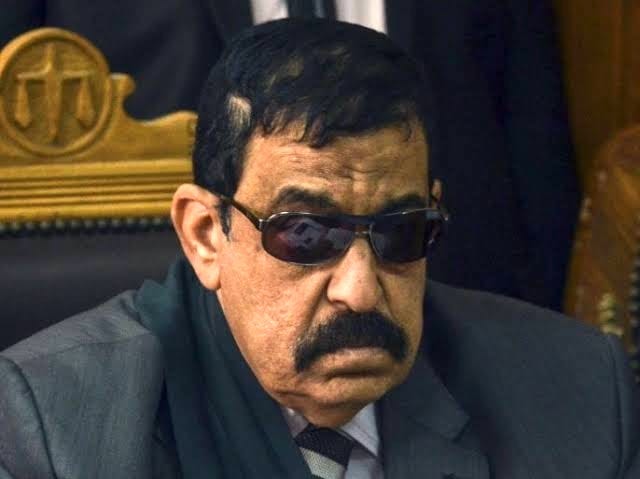
Born in Assiut and living mostly in Cairo, Shehata earned a law degree in 1972, joined the public prosecution in 1978, and ascended to the bench in 1980. He rose steadily through Egypt’s judicial hierarchy, serving as president of a criminal court in Assiut in the early 1990s before returning to Cairo, where he ultimately became head of the Cairo Criminal Court and chief of the Terrorism Circuit. He retired roughly three years before his death.
Shehata earned the nickname “the judge of executions” for presiding over mass political trials that erased due process and replaced individual guilt with collective punishment. In the Kerdasa police station case, he initially sentenced 183 defendants to death in one of the largest mass execution rulings in modern Egyptian history, a verdict later overturned on appeal and reduced to dozens of executions and life sentences. He also oversaw major terrorism and protest-related cases in the wake of the Rabaa dispersal, issuing further death penalties and sweeping life terms.
According to human rights activist Sarah Hamza, who’s been tracking his cases, Shehata issued more than 300 death sentences, 487 life terms, and harsh rulings against at least 74 children, along with over 108 prison sentences ranging from five to 15 years. The same figures show that courts under his authority imposed fines exceeding LE52.9 million.
The Gavel and the Gun

Mahmoud Hamad’s Judges and Generals in the Making of Modern Egypt is a profound meditation on power, legality, and endurance. Published by Cambridge University Press in 2019, it stands as a monumental study of how Egypt’s modern state was built on a pact between the courtroom and the barracks. The book reads as both a work of political science and a national biography. Through its pages, one sees how the country’s rulers transformed the law into a language of obedience, and how the judges, in return, used the state to preserve their authority.
Shehata was not a silent cog in an authoritarian machine. In public Facebook posts and media interviews, Shehata denounced the January 2011 revolution as a conspiracy against the state, portrayed protesters as agents of chaos serving foreign agendas, denied that torture occurred in prisons, and openly praised the police and army for “saving Egypt,” framing repression as a patriotic duty.
International human rights organizations repeatedly condemned his courtroom as a theater of coerced confessions, predetermined rulings, and political justice.
Shehata did not merely witness the collapse of the rule of law. He engineered it, transforming Egypt’s courts into execution halls in service of power.
Reading List on the Egyptian Revolution
Proud that my upcoming book is included.